Shopping Basket
You have no items in your shopping basket.


Wishlist
Your wishlist is currently empty
Born in 1899 in rural Queensland to a stockman and his wife, Florence Broadhurst spent the following seven decades constructing and demolishing versions of herself with a thoroughness that most people never apply to a single life. She toured the colonial Far East as a vaudeville singer in the 1920s, ran a performing arts academy in Shanghai, reinvented herself in London as Madame Pellier — a French couturier dressing the well-heeled — then returned to Australia as an aristocratic English lady and landscape painter. None of it was quite what it appeared. She lied about her age, her nationality, her name, and her past, and did so with enough conviction that the fictions held for decades.
At sixty, she launched the venture that would outlast everything else: a luxury hand-printed wallpaper studio in Sydney's Paddington, which she described without irony as "the only studio of its kind in the world." She was not entirely wrong. By the mid-1970s, her archive had grown to over 530 designs — geometrics, tapestries, florals, psychedelic prints, and chinoiserie — each one hand-screen printed in a palette she directed herself. Bold scale, high colour, exacting production. She was murdered in her studio in 1977; the case was never solved.
After her death, the archive changed hands several times and spent years in near-obscurity before Signature Design Archive committed to restoring and reintroducing the work internationally. The revival was slow and then suddenly total: Kate Spade's creative director called the archive "ground-breaking and sensational — one of the most creative things to come out of Australia." British designer Ilse Crawford put it differently: "Her patterns are exceptional. They exist on the cusp of a paradox. Every time you think you can sum them up, you can't."
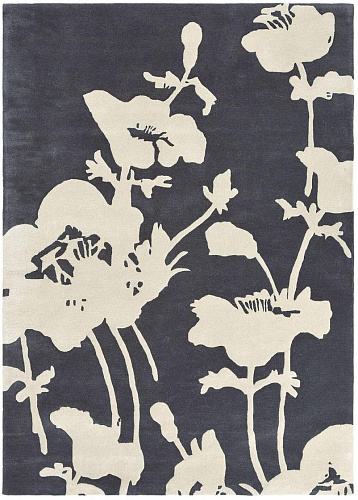
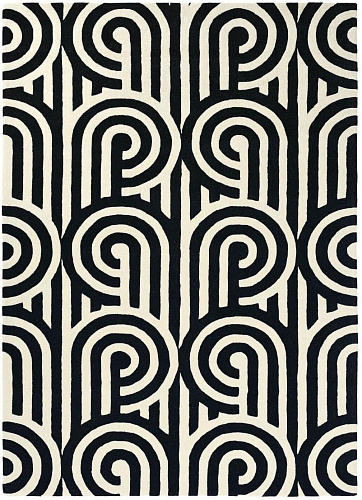
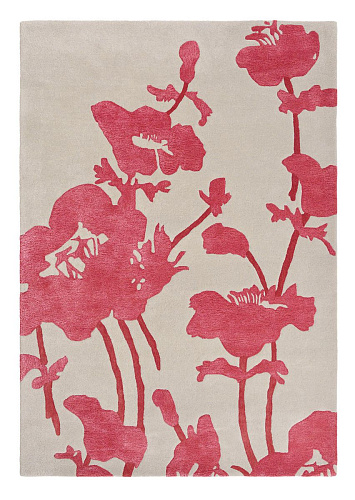
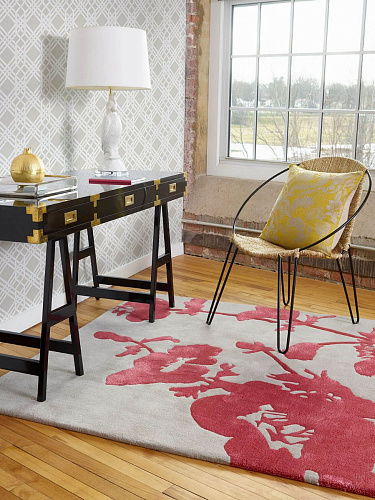
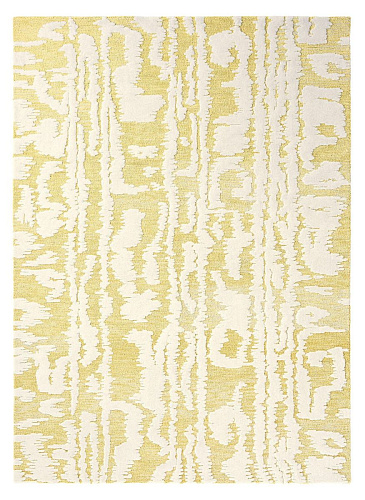
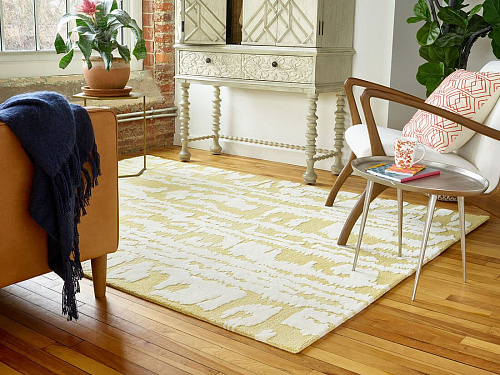
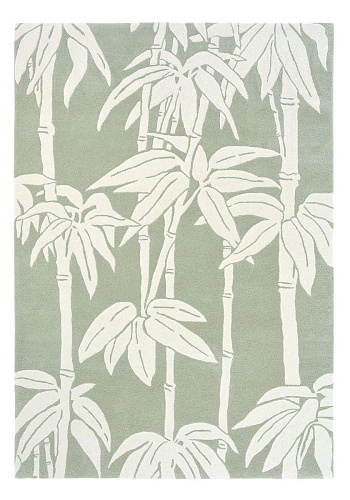
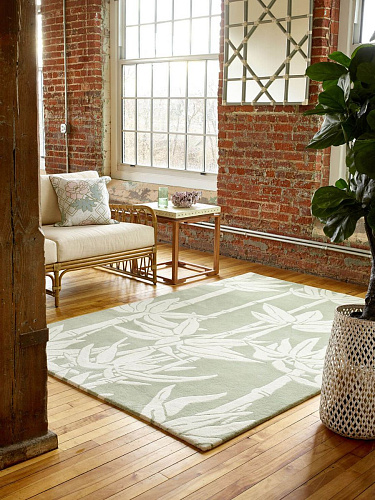
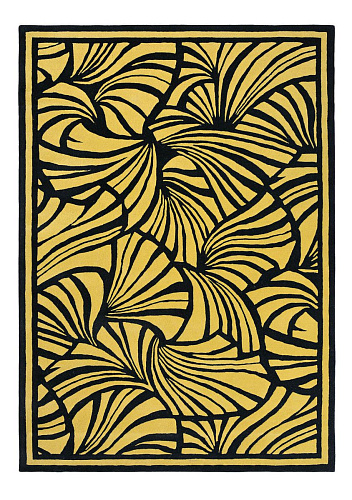
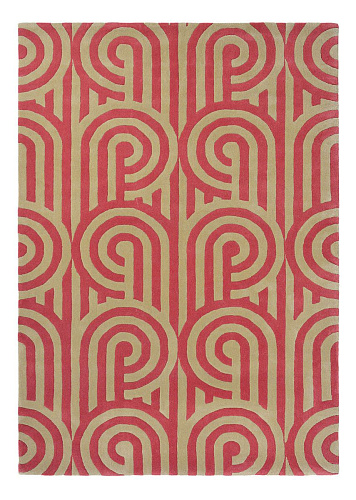
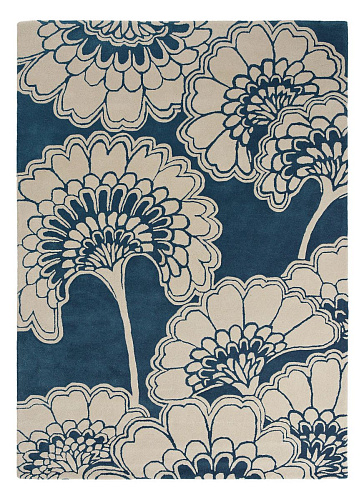
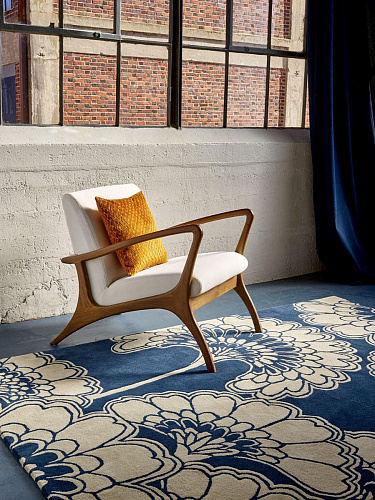
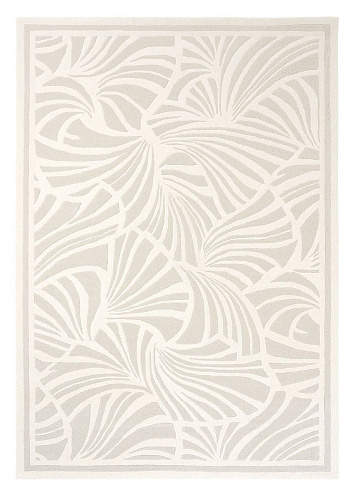
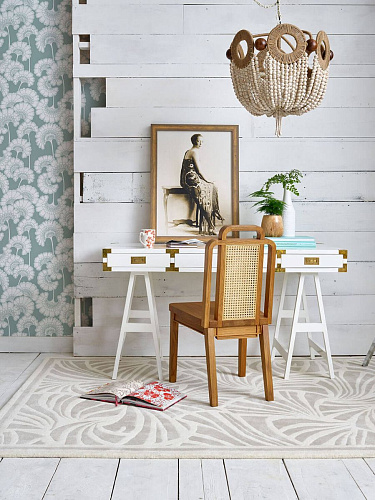
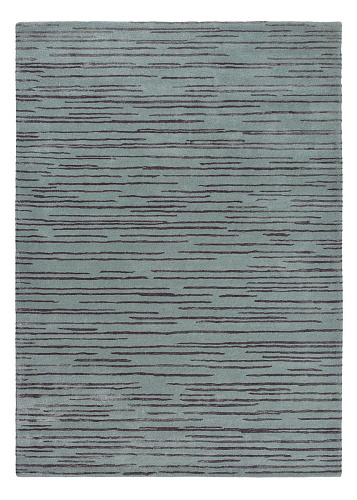
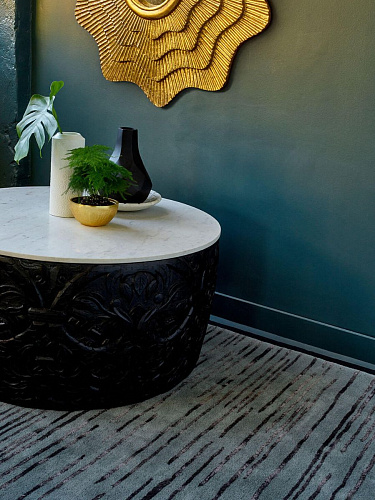
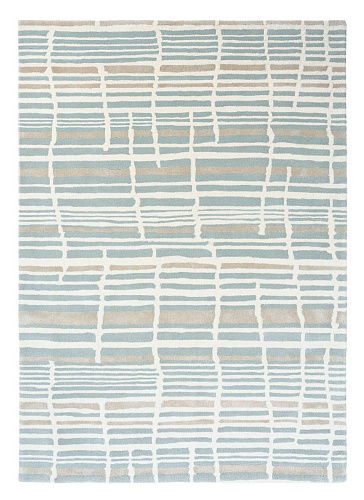
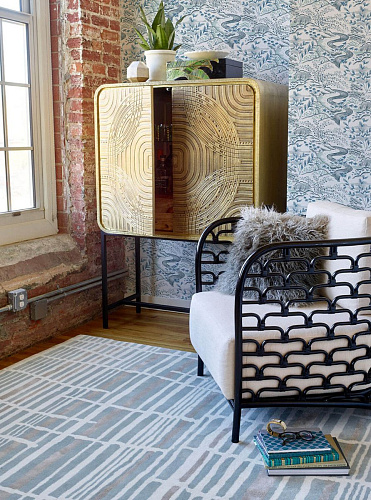
The rug collection, produced by Dutch manufacturer Brink & Campman under licence from the archive, translates Broadhurst's original print designs into hand-tufted construction using New Zealand wool and viscose. The wool holds the pile; the viscose carries the sheen that makes the more graphic patterns — Japanese Fans, Horses Stampede, the bold geometric Squares — behave differently in changing light. These are not reproductions of the wallpapers. They are reinterpretations of the same source material in a different medium, and the transition is handled with enough care that the visual intelligence of the originals comes through intact.
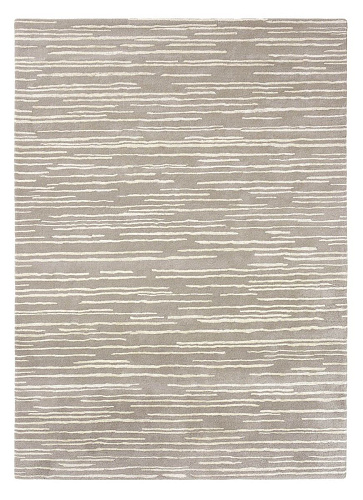
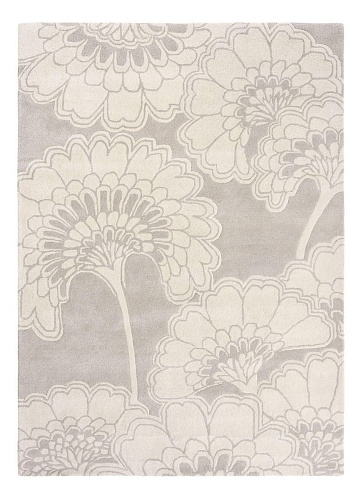
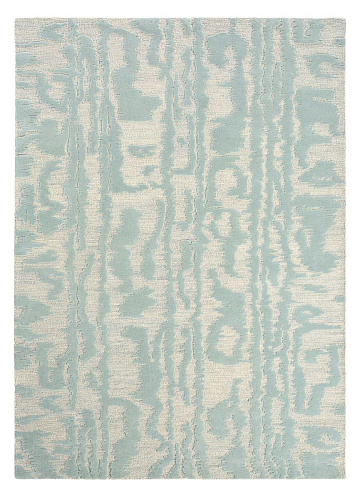
The collection spans the full range of what Broadhurst produced in her lifetime. Some pieces are immediately recognisable as her work — large-scale repeat patterns with the kind of chromatic confidence that only someone who spent decades in Shanghai and London and Sydney could credibly pull off. Others are quieter: tighter weaves in stone, charcoal, and ivory that sit inside neutral schemes without demanding acknowledgement. Both ends of the range share the same surface quality and the same design intelligence beneath them.
The Florence Broadhurst rug collection is available through SayRug — one of the few UK stockists carrying the range in full, for those who want the archive on their floor rather than their walls.