
What Are Braided Rugs?
Braided rugs occupy a curious and enduring place in the world of interiors. At first glance they can appear humble, even nostalgic, yet their appeal lies precisely in that sense of quiet continuity. These are rugs shaped by hands rather than machines, built through repetition, patience, and an understanding of material that comes from long familiarity. A braided rug does not shout for attention, but it anchors a space with a calm, assured presence that feels earned rather than applied.
At their core, braided rugs are formed by plaiting strips of material into long braids, which are then stitched together in spirals or elongated ovals. Traditionally made from wool or cotton, they were once a practical response to scarcity, a way of turning worn textiles into something useful and lasting. Today, that same construction is valued not out of necessity, but for its tactility, depth, and unmistakable sense of human scale. In a world of increasingly smooth and perfect surfaces, braided rugs offer texture that feels lived with rather than designed on screen.
A Material Language Rooted in Craft
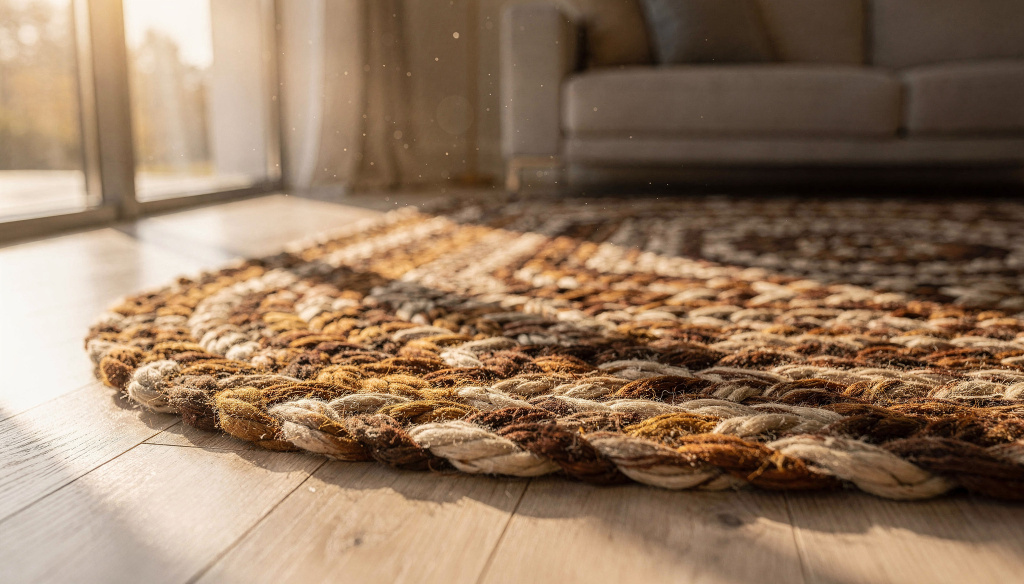
The defining quality of a braided rug is its structure. Unlike flat woven or tufted rugs, the surface is subtly dimensional, built up through overlapping coils that create gentle rises and shadows. This gives braided rugs a softness underfoot that is different from pile, more yielding and organic, responding naturally to movement. The eye reads this texture instinctively, registering warmth and familiarity before pattern or colour even come into play.
Because braided rugs rely so heavily on material integrity, their success depends on quality fibres and skilled making. Wool remains the most prized option, offering resilience, natural warmth, and a depth of colour that synthetic alternatives struggle to replicate. When produced as part of considered handcrafted rug collections, braided designs feel intentional rather than rustic, their craft elevated through thoughtful palettes and refined proportions. The result is a rug that feels as relevant in a contemporary home as it does in a country setting.
Why Braided Rugs Feel So Familiar
There is a reason braided rugs evoke such a strong emotional response. Their forms are deeply ingrained in domestic memory, associated with kitchens warmed by early light, hallways that carried the sound of daily comings and goings, and rooms designed for use rather than display. Yet familiarity need not mean dated. When reinterpreted with restraint, braided rugs become a grounding force, counterbalancing sleek furniture or architectural interiors that might otherwise feel austere.
Their patterns are rarely complex, relying instead on repetition and subtle variation. Rings of colour or elongated braids create rhythm without visual noise, allowing other elements in the room to breathe. This makes braided rugs particularly effective in spaces where calm is desired, such as bedrooms, reading rooms, or informal sitting areas. They do not compete for attention, but they reward closer inspection, revealing nuance through use rather than instant impact.
Braided Rugs in Contemporary Interiors
Modern interiors have rediscovered braided rugs precisely because they resist trend-driven styling. In minimalist spaces, they introduce softness without clutter, their rounded forms breaking up hard angles and linear layouts. In more layered homes, they act as connective tissue, linking furniture of different eras or materials through shared warmth. Their versatility lies not in neutrality, but in adaptability, the ability to sit comfortably within many visual languages.
Designers often pair braided rugs with simpler weaves to create contrast underfoot. A braided piece layered alongside or near a more graphic flat woven rug can heighten the tactile experience of a space, allowing each texture to amplify the other. This interplay is subtle but effective, especially in open-plan rooms where zoning relies more on feel than on walls. The braided rug signals comfort, while flatter weaves bring clarity and structure.
Shape, Scale, and Quiet Confidence
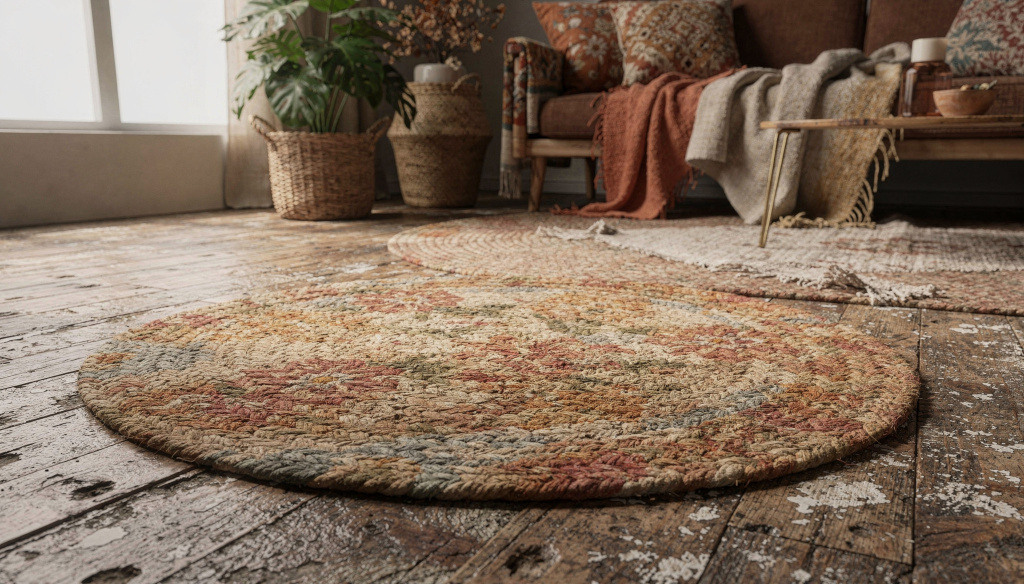
Braided rugs are most commonly found in oval or round forms, shapes that reinforce their handcrafted origins. These silhouettes work particularly well in transitional spaces such as hallways, kitchens, or beneath circular dining tables. The absence of sharp corners allows the rug to flow naturally within a room, guiding movement rather than interrupting it. Even rectangular braided rugs retain a softness, their edges gently defined rather than crisply cut.
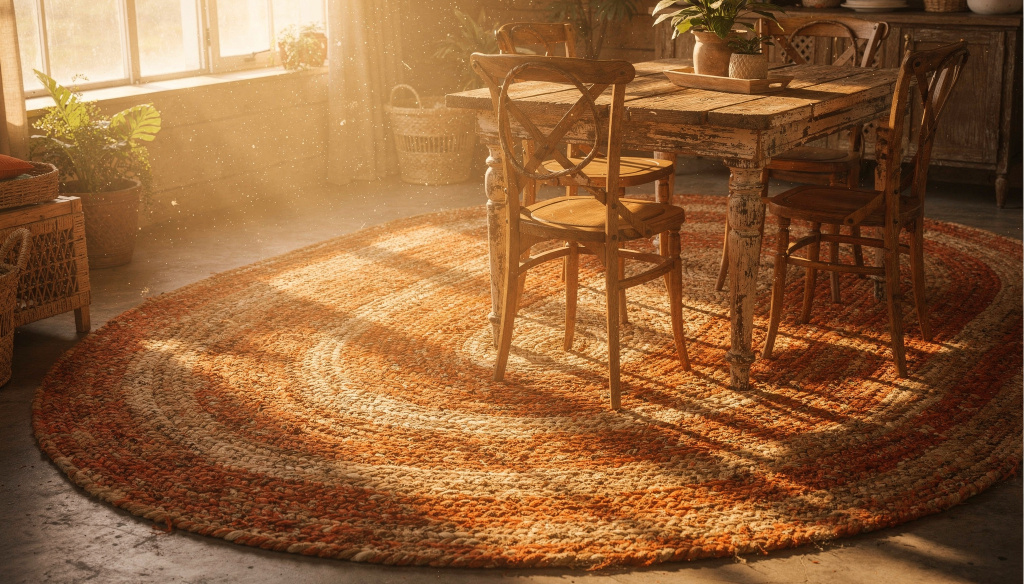
Scale is crucial to their success. Too small, and a braided rug can feel tentative or decorative. Generously sized, it becomes a foundation, encouraging furniture to settle into place. In dining rooms, a larger braided rug absorbs sound and softens chairs being drawn back. In living areas, it creates an island of warmth that invites sitting on the floor, stretching out, or lingering longer than planned.
Living with a Braided Rug
One of the understated pleasures of braided rugs is how they age. Rather than deteriorating, they develop character, the fibres compressing gently where footsteps repeat, the colours mellowing rather than fading. This patina is not a flaw, but a record of use, making each rug increasingly personal over time. In homes that value authenticity over perfection, this quality is deeply appealing.
They are also forgiving rugs, well suited to spaces where life unfolds without ceremony. Kitchens, boot rooms, and family rooms benefit from their durability and easy-going nature. Spills and marks feel less catastrophic on a rug that already embraces irregularity and texture. This ease allows braided rugs to exist not as precious objects, but as trusted companions in daily life.
An Enduring Presence
Ultimately, braided rugs endure because they answer a fundamental desire for comfort and continuity. They are rooted in history, yet adaptable to modern living. Their beauty lies not in novelty, but in familiarity refined through thoughtful design and quality making. When chosen well, a braided rug does more than decorate a room; it settles it, lending a sense of calm assurance that allows everything else to fall into place.
In an era where interiors are increasingly curated for immediacy, braided rugs offer something slower and more considered. They remind us that good design does not always announce itself. Sometimes it simply supports the way we live, quietly and reliably, year after year.