
Modern Farmhouse Style: Rugs That Ground the Space
Farmhouse decor has evolved far beyond its early associations with purely traditional country homes. Today’s modern rustic interiors blend weathered textures with clean silhouettes, pairing warmth and restraint in equal measure. At the center of this balance sits one often-underestimated element: the rug. More than a decorative layer, the right rug defines zones, introduces texture, and quietly unifies contrasting materials such as raw wood, linen upholstery, and matte metal finishes. In farmhouse spaces especially, rugs act as the visual anchor that keeps open-plan layouts from feeling sparse or disconnected.
Unlike trend-driven interiors that rely on bold color or statement furniture, farmhouse design is rooted in subtlety. Rugs in this context should not shout for attention, but they must still carry presence and intention. Their role is to ground the room, soften architectural lines, and bring a sense of history into spaces that might otherwise feel too polished. Whether placed beneath a reclaimed dining table or layered in a cozy sitting area, a thoughtfully chosen rug can establish the emotional tone of the entire home. Understanding how to select and place rugs is therefore essential to mastering the modern rustic aesthetic.
Understanding the Modern Farmhouse Aesthetic Through Textiles
Modern farmhouse design thrives on contrast: old and new, refined and imperfect, minimal and expressive. Textiles are one of the few elements that can embody all of these qualities at once. A rug with a gently faded pattern, for example, introduces a sense of age and narrative without overwhelming a clean-lined interior. Natural fibers such as wool, jute, and cotton resonate with the farmhouse ethos because they age gracefully and carry tactile depth. These materials also complement other organic finishes commonly found in rustic homes, such as oak floors and stone surfaces.
Color palettes in modern farmhouse spaces tend to remain grounded and restrained. Soft neutrals, warm ivories, muted greys, and earthy browns form the foundation, allowing texture to do much of the visual work. Rugs that echo these tones help maintain cohesion while still offering variation through weave and pattern. Country-inspired designs, when kept understated, can feel timeless rather than nostalgic, especially when paired with contemporary furnishings. Collections inspired by traditional rural motifs, such as those found in country style rugs, often strike this balance particularly well.
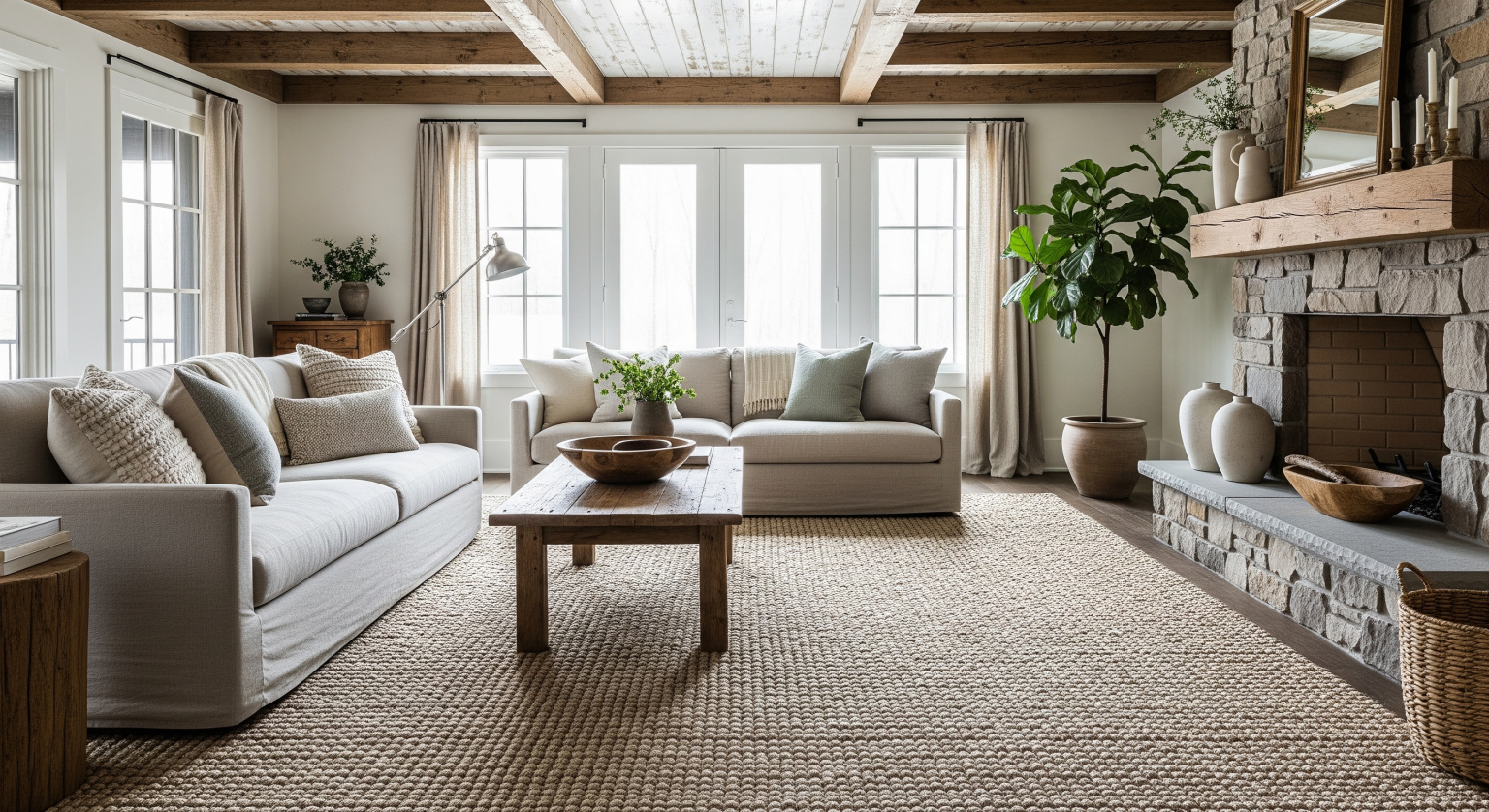
Another defining feature of farmhouse interiors is their emphasis on comfort and livability. Rugs contribute significantly to this by softening acoustics and creating warmth underfoot. In open-plan homes, they also serve a practical purpose by visually separating living, dining, and kitchen zones without the need for walls. A large area rug beneath a seating arrangement can instantly make the space feel intentional rather than transitional. In this way, rugs become both functional and symbolic, reinforcing the idea of home as a place of ease and gathering.
Choosing the Right Rug Materials and Construction
Material choice is one of the most important decisions when selecting a rug for a farmhouse interior. Wool remains a favorite for good reason, offering durability, insulation, and a naturally rich texture that suits rustic settings. Wool rugs also respond beautifully to light, revealing subtle variations in tone that add depth to neutral spaces. For high-traffic areas such as hallways or family rooms, their resilience makes them especially practical. When craftsmanship matters as much as material, exploring handmade rugs can ensure each piece carries individuality and longevity.
Construction techniques influence not only appearance but also how a rug interacts with the space over time. Flatweave rugs, for example, offer a more casual and versatile look, ideal for kitchens or layered arrangements. Pile rugs, on the other hand, introduce softness and comfort, making them well suited to bedrooms and living rooms. Hand-knotted rugs stand apart for their density and intricate detailing, often becoming heirloom pieces that gain character with age. Their craftsmanship aligns naturally with the farmhouse appreciation for authenticity, as seen in collections of hand knotted rugs.
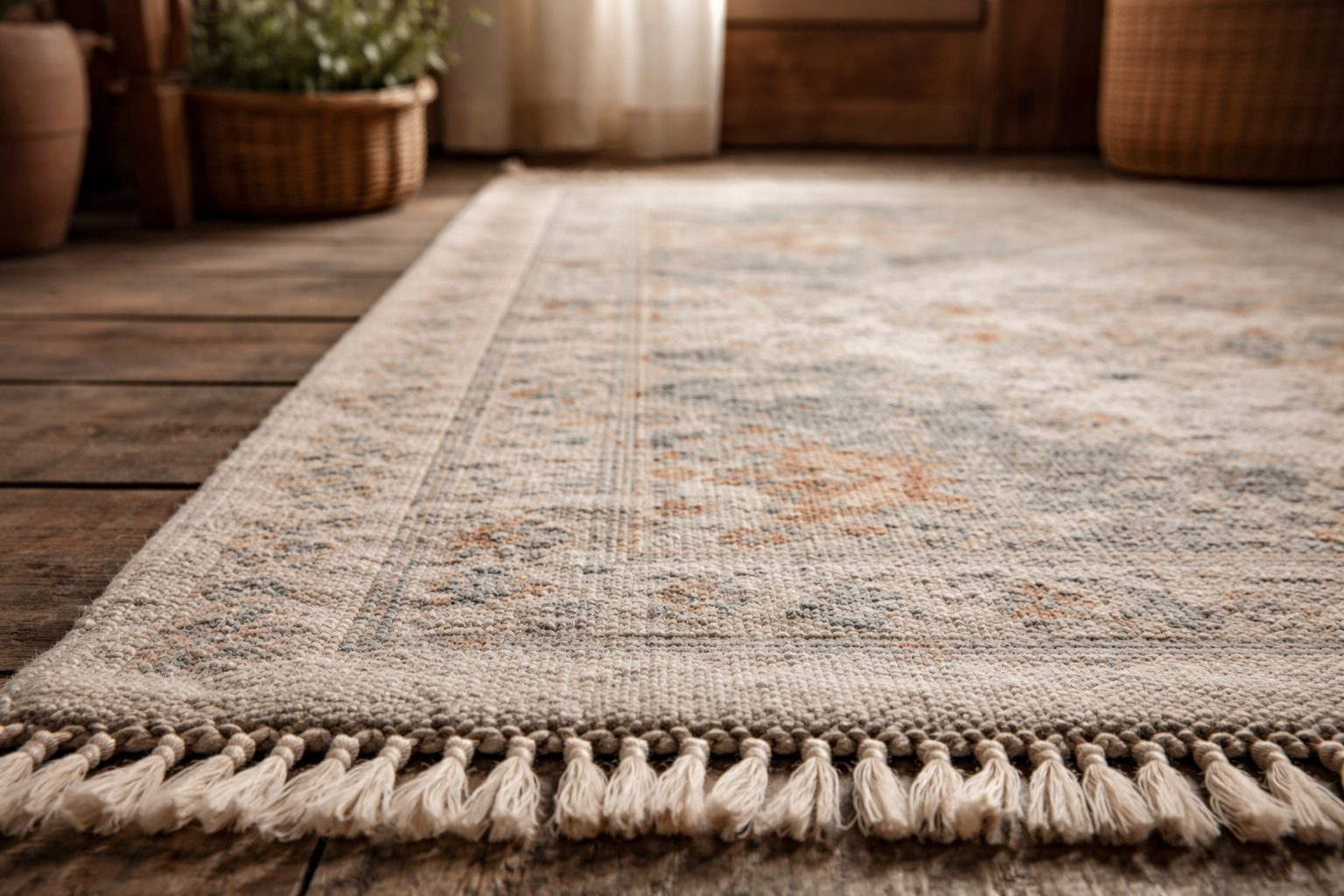
Sustainability also plays an increasing role in modern farmhouse design choices. Homeowners drawn to rustic aesthetics often value responsible sourcing and traditional production methods. Rugs made using time-honored techniques tend to have smaller environmental footprints and longer lifespans, reducing the need for frequent replacement. This approach not only supports artisans but also aligns with the farmhouse philosophy of mindful living. Selecting a rug with intention ensures it becomes a lasting part of the home rather than a temporary accessory.
Pattern, Scale, and Placement in Rustic Interiors
Pattern selection in farmhouse decor requires a measured hand. Overly ornate designs can feel out of place, while patterns that are too minimal may lack warmth. Subtle geometrics, softened florals, and distressed motifs often work best, offering visual interest without dominating the room. Scale is equally important; larger patterns tend to feel more relaxed and organic, while small, busy designs can disrupt the calm atmosphere typical of rustic spaces. The goal is to enhance, not compete with, architectural features such as exposed beams or shiplap walls.
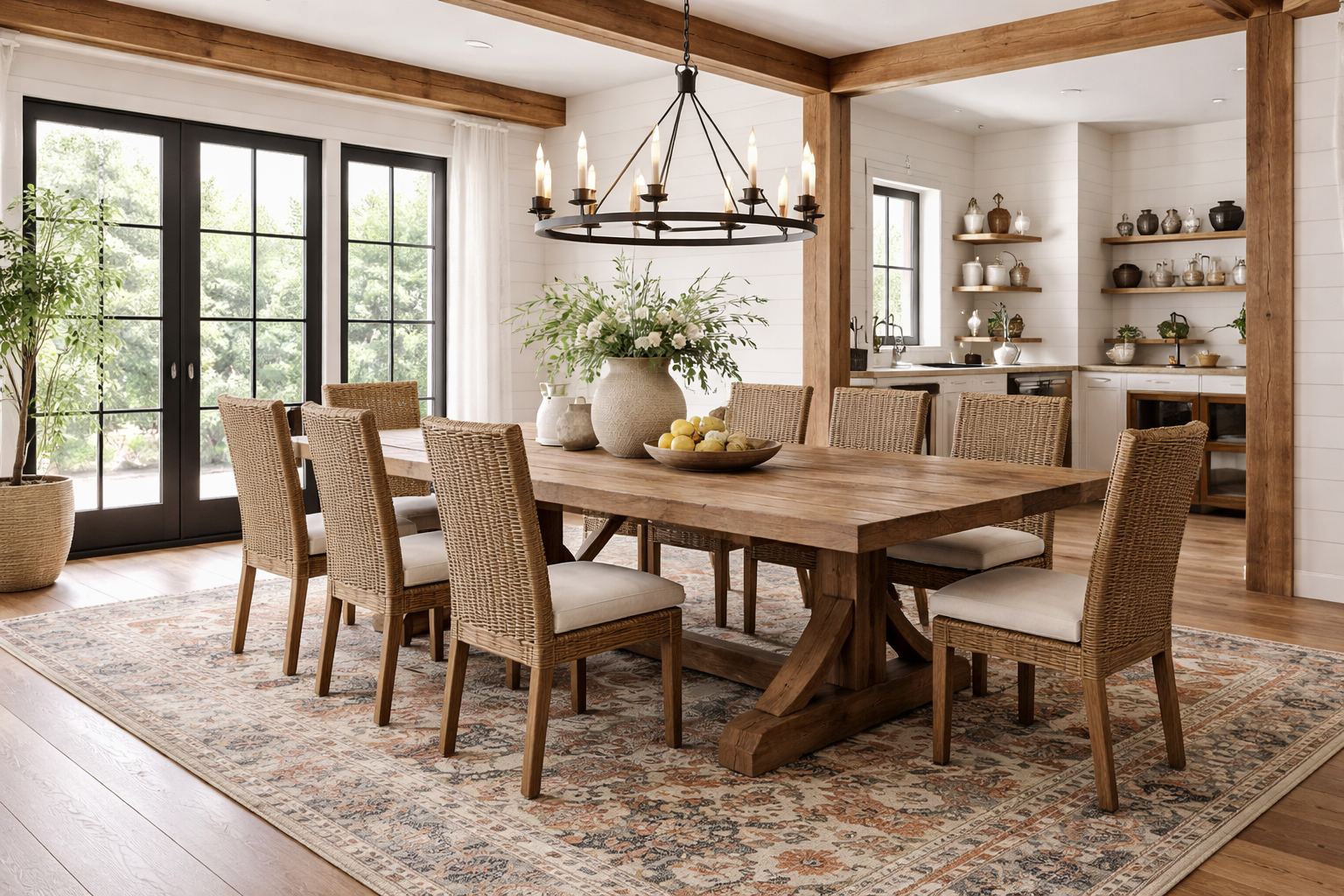
Placement decisions should respond to how the space is used rather than purely aesthetic considerations. In living rooms, rugs should extend beneath key furniture pieces to create a cohesive seating area. Dining room rugs need to be large enough to accommodate chairs even when pulled out, maintaining both function and proportion. In bedrooms, positioning a rug beneath the bed can introduce softness while visually anchoring the room’s focal point. Thoughtful placement reinforces the sense of order and comfort central to farmhouse living.
Layering rugs has also become a popular technique within modern rustic interiors. A neutral base rug paired with a smaller patterned piece can add depth and flexibility, allowing seasonal updates without major changes. This approach works particularly well in relaxed spaces such as reading nooks or entryways. Layering also reflects the lived-in quality that farmhouse decor celebrates, suggesting a home that has evolved organically over time. When done carefully, it adds richness without clutter.
Elevating the Farmhouse Look with Thoughtful Rug Investment
While farmhouse style is often associated with simplicity, investing in quality rugs can elevate the overall design significantly. A well-made rug brings refinement to rustic elements, ensuring the space feels curated rather than casual. Luxury does not have to mean opulence; in farmhouse interiors, it often manifests as superior materials, craftsmanship, and understated design. Selecting from thoughtfully curated luxury rugs allows homeowners to introduce sophistication while maintaining warmth and authenticity.
Rugs also offer an opportunity to tell a story within the home. Whether inspired by regional weaving traditions or contemporary interpretations of classic patterns, they contribute layers of meaning and personality. Over time, these pieces become part of the home’s narrative, bearing subtle signs of daily life and shared moments. In a style that values heritage and connection, this sense of continuity is invaluable. Choosing rugs with care ensures they remain relevant as tastes and spaces evolve.
Ultimately, the role of rugs in modern farmhouse decor extends beyond decoration. They shape how spaces feel, function, and endure. By grounding rooms with texture, warmth, and intention, rugs help transform houses into homes that feel both rooted and refreshed. When selected thoughtfully, they bridge the gap between rustic charm and contemporary comfort, anchoring the modern farmhouse style with quiet confidence.