
Luxury Interior Design Projects in New York City
Luxury interior design in New York City is inseparable from the skyline itself. Glass-walled residences suspended above Central Park, sculptural penthouses overlooking the Hudson, and meticulously renovated pre-war apartments all respond to a singular truth – in Manhattan, the view is architecture. Designers must therefore compose interiors that honour the drama beyond the glazing while delivering warmth, privacy, and liveable sophistication within. The finest projects do not compete with the city; they frame it. Every material, line, and proportion is selected with that relationship in mind.
The interiors presented here exemplify this distinctly New York approach to luxury. Expansive living areas are softened by curved seating, stone fireplaces are treated as sculptural elements, and kitchens are integrated seamlessly into open-plan environments. Italian craftsmanship, artisanal rugs, and statement bathtubs play essential roles in shaping these elevated urban homes. The atmosphere is refined yet grounded, contemporary yet timeless. In a city defined by ambition, design must deliver clarity as well as impact.
Penthouse Living Above Central Park
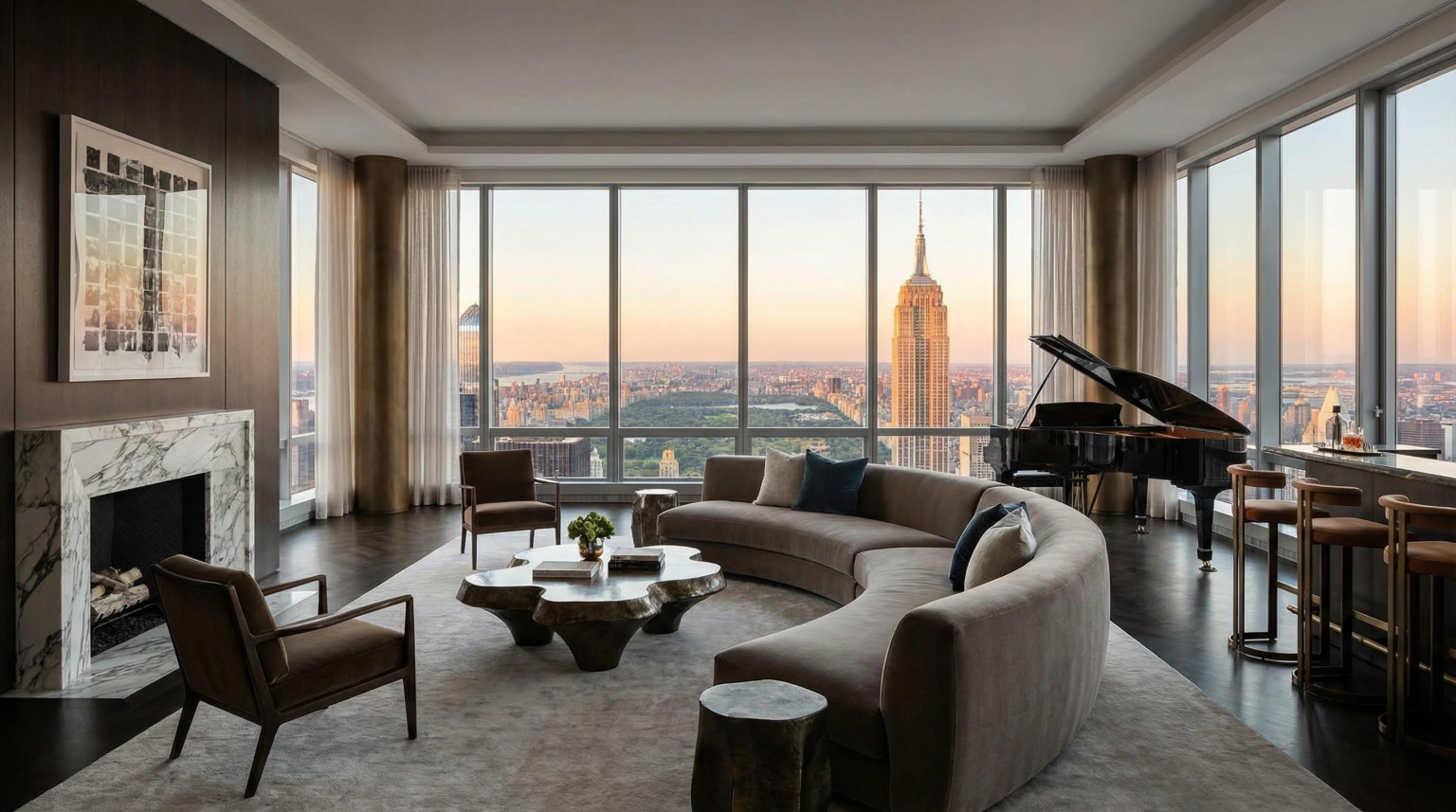
The defining feature of many high-end Manhattan projects is uninterrupted glazing that captures the sweep of Central Park and the Empire State Building beyond. In the principal living area, a sculptural curved sofa creates intimacy within a vast footprint. Its organic form contrasts elegantly with the rectilinear grid of the windows, softening the architecture without diminishing it. A low, monolithic coffee table in carved stone anchors the seating zone, echoing the natural materials found throughout the residence. Beneath, a generously scaled rug introduces warmth against dark timber flooring.
Designers frequently specify refined pieces from curated collections of luxury rugs in such spaces. The rug is not decorative excess; it is an acoustic and visual necessity. In apartments lined with glass and polished surfaces, textiles temper reverberation and establish comfort. Subtle tonal variation ensures the flooring enhances rather than distracts from the skyline. The rug becomes the quiet foundation upon which the rest of the room rests.
A grand piano positioned near the glazing reflects a common feature in luxury New York residences – artful living. The instrument is both functional and sculptural, reinforcing the dialogue between culture and architecture. Natural light pours across dark floors during the day, while evening transforms the space into a luminous box suspended above the city grid. Layered lighting ensures that the interior maintains presence long after sunset. The result is immersive yet composed.
In New York’s most exceptional interiors, luxury is measured by proportion, material integrity, and the confidence to let the skyline lead.
The Open-Plan Kitchen as Architectural Core
Open-plan layouts dominate contemporary Manhattan developments, demanding kitchens that operate as both workspace and visual statement. In this project, a substantial marble island with dramatic veining anchors the interior. Its waterfall edges introduce sculptural weight, while integrated appliances maintain crisp lines. Walnut cabinetry along the rear wall provides warmth and depth, balancing the cool precision of stone. The palette is deliberate – rich timber, pale marble, brushed brass, and muted textiles.
Above the island, a linear pendant composed of globe lights adds gentle rhythm without overwhelming the space. Upholstered bar stools introduce comfort, reinforcing the kitchen’s role as a social hub rather than a purely functional zone. The adjacency of dining and living areas requires harmony in material and scale. Italian craftsmanship frequently underpins these compositions, with pieces sourced from distinguished collections of Italian furniture offering sculptural clarity and enduring quality. Their presence ensures that the transition between zones feels seamless rather than segmented.
New York’s luxury kitchens are designed for both entertaining and daily living. Surfaces must withstand use while maintaining aesthetic coherence. Marble backsplashes extend vertically to amplify height, and dark-stained timber cabinetry grounds the space. Every join is precise, every handle considered. The kitchen becomes an architectural volume within the larger envelope.
Bedrooms as Elevated Retreats
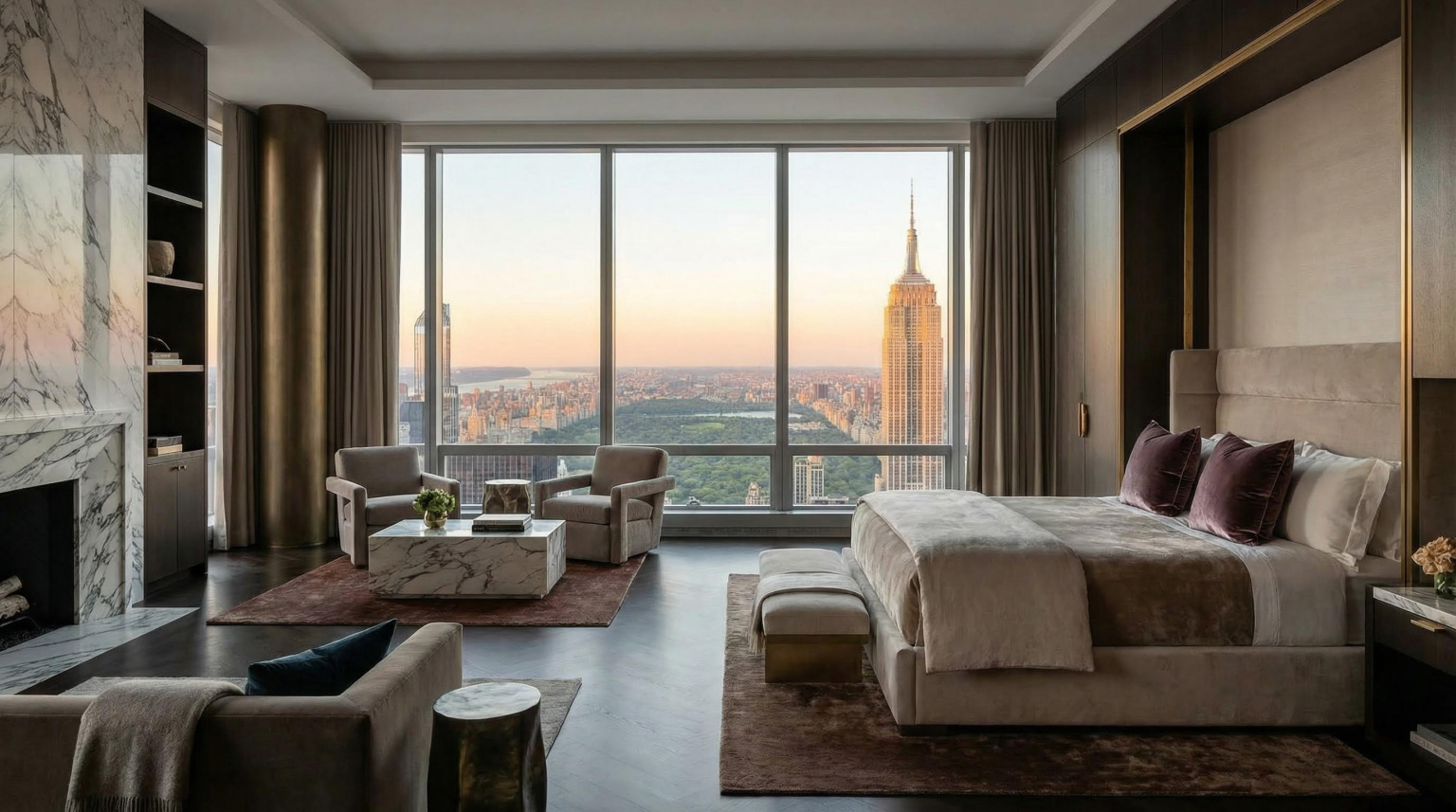
In contrast to the drama of the living areas, the principal bedroom adopts a quieter language. Floor-to-ceiling windows continue the panoramic narrative, yet furnishings are intentionally restrained. A tailored upholstered bed in soft neutral tones sits upon a richly textured rug, creating a cocoon-like atmosphere against the vastness of the view. Deep plum and charcoal cushions introduce depth without disrupting serenity. The overall composition encourages stillness.
A marble fireplace integrated into custom millwork reinforces the architectural continuity of the residence. Flanking armchairs and a low stone table create a secondary seating zone positioned directly before the glazing. Morning light floods the room, while sunset casts warm hues across the skyline. Designers often rely on dense, tactile rugs to soften these private spaces, selecting pieces that echo the understated elegance found in high-end collections. Texture here is paramount.
Luxury in the bedroom is experiential rather than ostentatious. Materials are chosen for their sensory quality – brushed timber, soft wool, cool stone. The spatial arrangement respects both the view and the need for intimacy. Even in a city that never sleeps, the bedroom must feel insulated and restorative.
Bathrooms and the Rise of Spa-Level Design
New York’s most ambitious projects increasingly treat bathrooms as private sanctuaries. Large-format marble slabs minimise grout lines, enhancing continuity and scale. Walk-in showers with frameless glass preserve openness, while brushed metal fixtures introduce warmth against pale stone. In many penthouses, freestanding bathtubs are positioned near windows to capitalise on panoramic views. Bathing becomes a ritual framed by the city.
Designers often specify statement pieces from curated collections of luxury bathtubs to anchor these spaces. Sculptural forms elevate the bath from functional fixture to centrepiece. Paired with underfloor heating and discreet lighting, the effect is both indulgent and serene. Even in compact Manhattan footprints, careful spatial planning ensures generosity of experience.
Material Cohesion and Urban Identity
Across New York’s luxury interior design projects, a clear pattern emerges. Dark timber floors ground expansive glazing. Marble introduces cool refinement, while warm metals prevent sterility. Textiles – particularly rugs and upholstered seating – temper acoustics and scale. Italian furniture contributes sculptural clarity, reinforcing the cosmopolitan character of the city. Each element is carefully calibrated to maintain equilibrium between grandeur and comfort.
Importantly, these interiors are not exercises in excess. They reflect a disciplined understanding of proportion. The skyline provides drama; the interior provides harmony. Designers resist overcrowding, allowing architectural features and curated pieces to breathe. In this restraint lies sophistication.
The Evolution of New York Luxury
As the city evolves, so too does its design ethos. Sustainability has become integral to high-end projects, with responsibly sourced timber, natural fibres, and long-lasting materials prioritised. Smart technology is seamlessly integrated, preserving visual purity while enhancing daily living. Acoustic performance, air quality, and wellness lighting are now essential components of luxury.
Yet despite these advancements, the core principle remains unchanged. Luxury interior design in New York City is defined by its relationship to context. Whether overlooking Central Park or the Hudson River, interiors must acknowledge the skyline while cultivating warmth within. Through curated furnishings, artisanal rugs, sculptural kitchens, and spa-like bathrooms, designers craft homes that reflect both global sophistication and distinctly New York ambition.
These projects demonstrate that true luxury in Manhattan is not loud or ostentatious. It is measured, architectural, and enduring. It is found in the curve of a sofa against the grid of a window, in marble veining that echoes river pathways, and in the quiet confidence of materials chosen to last. Above the city’s restless streets, these interiors offer clarity, comfort, and a refined perspective on urban living.