
How to Select Statement Furniture Pieces for Luxury Homes
A statement piece of furniture is not simply an expensive one. Expense, on its own, produces rooms that feel like showrooms rather than homes. The genuine article is something more specific: a piece with the authority to organise a room around itself, to give every other object in the space a reason for being where it is. Selecting these pieces well is one of the most demanding skills in interior design, and one of the most rewarding. The rooms that remain in the memory long after a first visit are almost always the ones where this selection has been made with confidence, knowledge, and an unhurried clarity of vision.
Begin with a Point of View, Not a Shopping List
The most common mistake in furnishing a luxury home is approaching the process as procurement rather than composition. A list of rooms to be furnished, a budget to be allocated, a deadline to be met: this framework will produce competent interiors, but rarely memorable ones. The rooms that achieve genuine distinction are those conceived around an idea rather than a specification.
That idea need not be elaborate. It might be as precise as a commitment to a single period — say, the rigorous geometry of Italian rationalism — or as intuitive as a response to the quality of light in a particular room at a particular time of day. What matters is that it exists, that it is genuinely held, and that every subsequent selection is tested against it. A piece that is beautiful in isolation but contradicts the interior's governing idea will always create a tension that no amount of styling can resolve.
Before purchasing anything, spend time in the space. Understand its proportions, its light, its relationship to adjacent rooms. Consider the architecture: the cornice height, the floor material, the character of the windows. Statement furniture does not exist in isolation; it exists in dialogue with the room it inhabits, and the finest pieces are those chosen with a precise understanding of that dialogue.
Scale: The Variable That Decides Everything
Of all the variables in furniture selection, scale is simultaneously the most important and the most frequently misjudged. A sofa that is ten centimetres too short for its wall looks apologetic. A dining table that is five centimetres too narrow for its room reads as provisional. Conversely, a piece that fills its space with confidence and authority creates a sense of rightness that is immediately felt, even by those who could not articulate why.
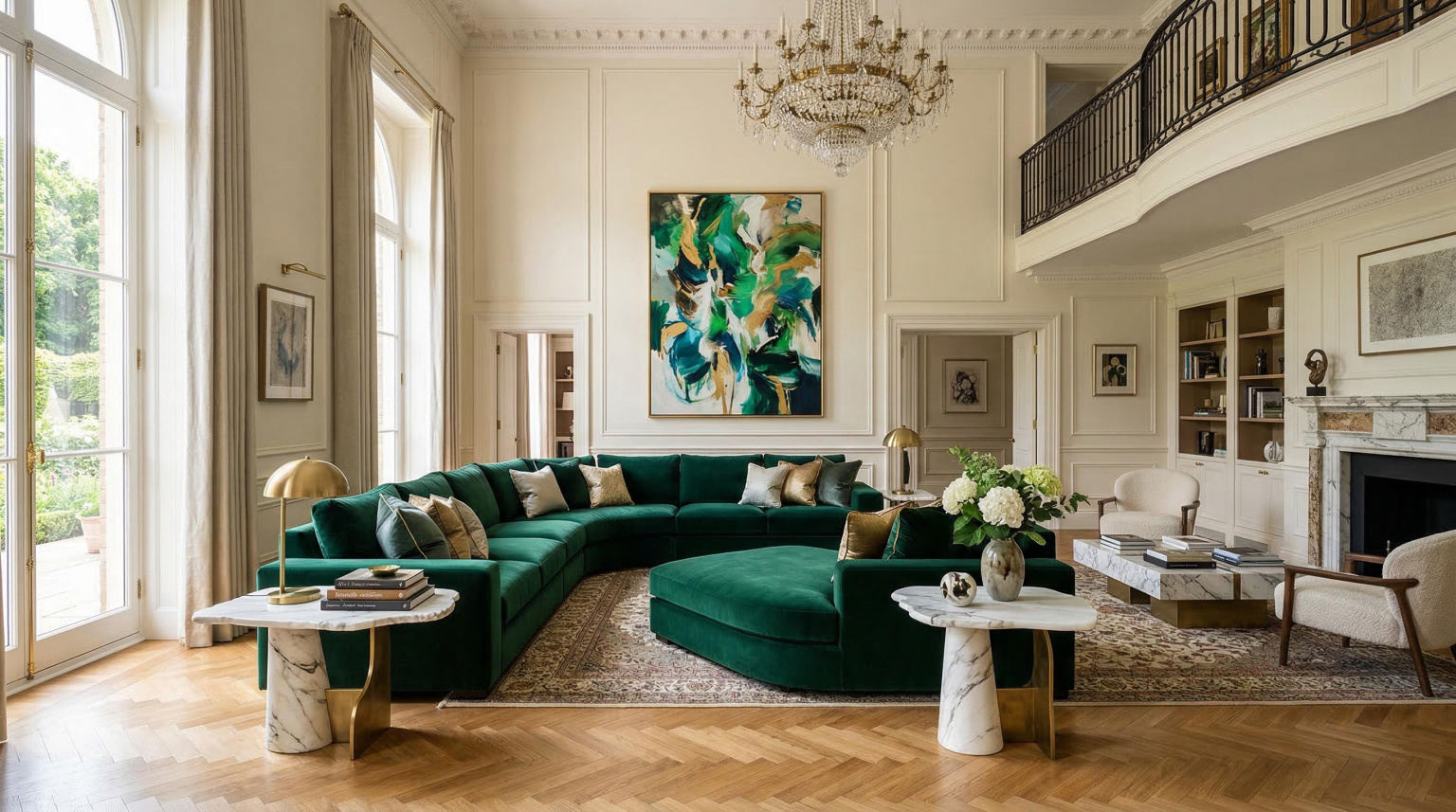
The rules of scale in luxury interiors differ from those in more modest spaces. High ceilings do not merely permit larger furniture; they require it. Rooms with generous floor areas need pieces proportioned to match: a six-seat sofa where a four-seat would be lost, a dining table that seats ten rather than eight, a wardrobe that runs wall to wall rather than standing free. The impulse to buy slightly smaller than necessary, from a misplaced sense of caution, is one of the most reliably expensive mistakes in interior design. Getting scale right first time, even when it means waiting for a bespoke commission, is almost always the more economical decision in the long run.
Material Intelligence: What Luxury Actually Means
In furniture of genuine quality, the material is never merely a surface treatment. It is structural, integral, and inseparable from the object's character. Solid walnut does not behave like veneered MDF with a walnut finish; the weight, the sound, the way it takes a mark and how that mark weathers over time are all fundamentally different. Marble is not a substitute for engineered stone. Hand-stitched leather is categorically unlike bonded leather. These distinctions matter not only aesthetically but practically: quality materials age gracefully, developing patina and depth, while lesser alternatives degrade in ways that are difficult to ignore and expensive to address.
The hallmarks of material excellence in luxury furniture are consistent. Solid timber frames, mortise-and-tenon joinery, eight-way hand-tied spring systems in upholstered seating. Full-grain leather over corrected-grain. Stone tops cut from single slabs rather than assembled from pieces. Brass hardware cast rather than pressed, with a weight that communicates its substance before you have even touched it. These are not details that photograph particularly well; they are details that reveal themselves through daily use, over years and decades. They are the difference between furniture that is bought and furniture that is kept.
For those building a collection of significant pieces, the work of designers represented in dedicated luxury furniture collections offers a useful orientation. The finest curators in this space apply consistent criteria of material integrity and constructional quality that do a great deal of the qualifying work before a piece ever reaches a showroom floor.
The Singular Versus the Considered Collection
There are two distinct philosophies for building a furnished interior of distinction, and understanding which applies to a given room is essential before making any significant purchase.
The first is the philosophy of the singular object: one extraordinary piece placed in a space calibrated to receive it. A sculpture-like chaise longue in a reading room. A dining table of exceptional provenance in an otherwise austere dining room. A desk of such authority that everything else in the study exists merely to support it. This approach demands confidence and a certain restraint; it works best in rooms with strong architecture that provides the visual counterweight a single piece requires.
The second is the philosophy of the considered collection: multiple pieces in dialogue, where the relationship between objects is as important as the objects themselves. A living room where the sofa, the occasional tables, the cabinet, and the rug exist in a conversation that has been carefully composed. This approach is more complex to execute well but capable of producing interiors of extraordinary depth. The risk is incoherence; the reward, when the composition succeeds, is a room that feels genuinely inhabited rather than arranged.
The Floor as the Fifth Wall
No statement furniture scheme achieves its full potential on a floor that has not been given equivalent consideration. The horizontal plane, which occupies more of the visual field than any wall, is the surface against which every piece of furniture is read. Its material, colour, and pattern either amplify or undermine whatever sits above it.
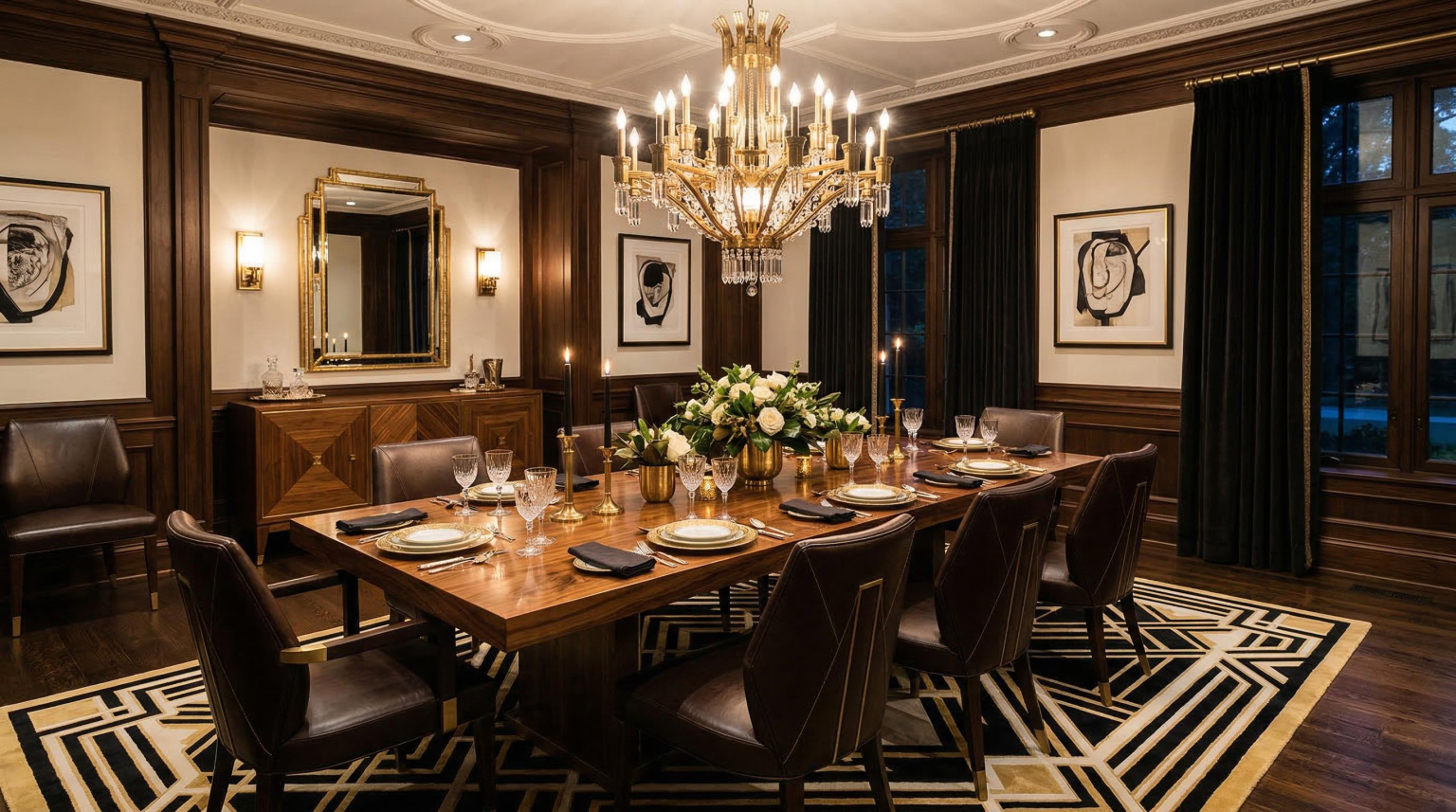
In rooms furnished with pieces of genuine ambition, the rug is not a decorative addendum but a compositional anchor. Its scale should be generous enough to sit beneath the front legs of all major seating pieces; its design should possess the visual complexity to hold its own as a significant object in the room. Art Deco rugs are particularly well suited to the demands of formal, architecturally considered rooms: their geometric rigour, their bold use of contrast, and their characteristic sense of graphic authority create an immediate visual foundation that organises the furniture above it with precision. Against a strongly patterned Art Deco field, a piece of streamlined furniture reads with particular clarity; against its geometry, organic forms in wood and leather take on a warmth they might not otherwise possess.
Provenance, Craft, and the Designer's Name
In the market for significant furniture, provenance matters. Not in the sense that a designer's name is a guarantee of quality (it is not always), but in the sense that understanding where a piece was made, by whom, and to what specifications is the only reliable way to evaluate what you are actually acquiring. The best furniture designers and makers are transparent about their processes, their materials, and the sources of those materials. This transparency is itself a quality signal: those who have nothing to hide do not hide it.
The distinction between furniture that is designed with genuine ambition and furniture that is designed to appear ambitious is increasingly legible once you know what to look for. Proportions that have been worked and reworked until they are correct rather than merely adequate. Details that reveal themselves slowly: the way a joint is finished, the profile of a leg, the quality of a drawer mechanism. These are not the details that make furniture expensive to buy; they are the details that make it irreplaceable to own.
Buying from craftsmen and studios whose work you have seen in person, handled, sat in, and examined at close quarters is always preferable to purchasing from photography alone. The camera is a generous editor: it flattens scale, eliminates texture, and removes context. The experience of being in the presence of an extraordinary piece of furniture is, by contrast, immediate and unambiguous. When the scale is right, the material is exceptional, and the making is irreproachable, the decision ceases to be a question of whether and becomes simply one of when.
Living with the Piece Before You Choose It
A practice that distinguishes the most assured collectors of furniture from casual buyers is the habit of living with a prospective purchase imaginatively before committing to it. This means more than a single showroom visit. It means returning to a piece multiple times, at different times of day and in different states of mind. It means sitting with it for long enough to form a view of how it handles extended proximity. It means placing fabric samples, stone samples, and paint chips beside it to understand how it behaves in the specific material context of the room it will inhabit.
The finest furniture dealers and designers understand this process and welcome it. They know that a purchase made with complete conviction will never be returned or regretted, and that the relationship between a collector and a significant piece of furniture is one that, ideally, spans decades. The urgency that characterises retail — the limited-time offer, the scarcity signal, the pressure to decide — has no place in a serious acquisition of this kind. Quality waits. The right piece, chosen with patience and full understanding, will repay that patience many times over in the quality of daily life it makes possible.
The Test of Time
There is a simple and reliable test for any piece of furniture under serious consideration: imagine it in the same room, in the same position, twenty years from now. Has it aged into the space, acquiring depth and the patina of use? Or has it dated in the way that fashion dates, becoming a record of a particular moment rather than a timeless presence? The pieces that pass this test reliably are those made from honest materials, designed with genuine formal intelligence, and constructed with sufficient care to withstand the demands of a life actually lived. These are not especially difficult to identify once the eye has been trained to find them. They are, however, easy to overlook in the noise of an industry that profits more from replacement than from permanence. The luxury home deserves better than that. So does the person who inhabits it.