
How to Place a Runner Rug in the Kitchen: A Practical and Stylish Guide
Runner rugs are a versatile and practical addition to any kitchen, combining comfort, style, and functionality. A well-placed runner can soften hard flooring, reduce fatigue while standing at counters, and introduce color or pattern into a space that often feels purely utilitarian. Unlike standard area rugs, runners are long and narrow, making them ideal for hallways, galley kitchens, or spaces in front of islands and sinks. However, their length and placement require careful consideration to maintain both safety and aesthetics. A poorly positioned runner can become a tripping hazard or make the room feel awkwardly segmented, while the right placement enhances workflow and visual appeal.
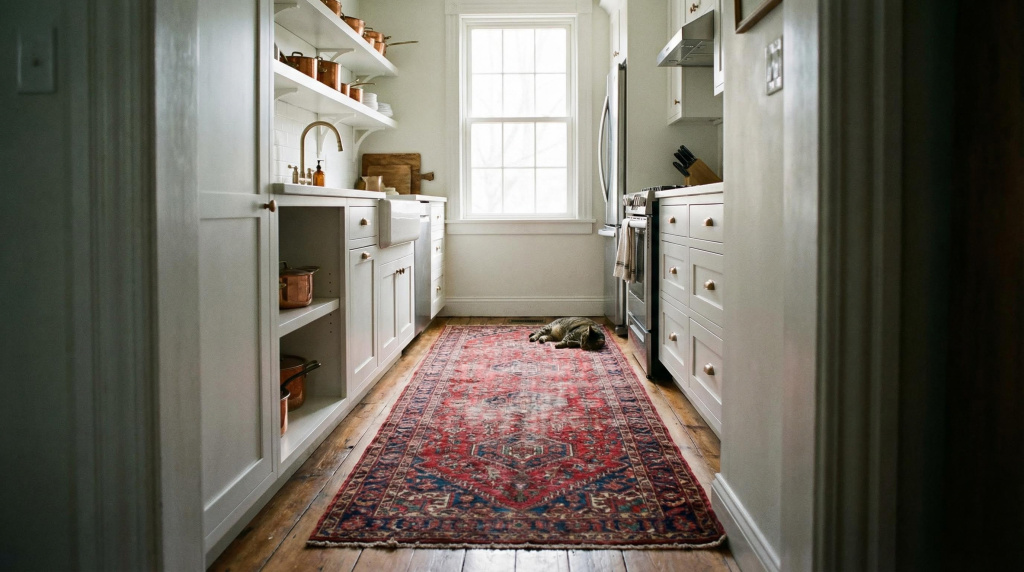
Before choosing a runner, it’s essential to consider the kitchen’s layout. Most kitchens benefit from a runner along the main traffic path, which often includes the sink, stove, and refrigerator. In galley or narrow kitchens, the runner should leave at least 30–45 cm of bare floor on either side to avoid crowding or visual imbalance. In open-plan kitchens, a runner can define cooking zones or create a transition between kitchen and dining areas. The goal is to combine functionality with design, allowing the rug to complement the space without obstructing movement.
Choosing the Right Length and Width
The correct size is crucial when placing a runner in the kitchen. Ideally, a runner should extend along the main work area but stop short of walls, cabinetry, or appliances by a few inches. This ensures that drawers and doors can open freely without catching on the rug. Length is generally guided by the kitchen layout: in a galley kitchen, a runner can span the distance between entrances, while in a U-shaped or L-shaped kitchen, shorter runners in front of the sink or stove can work just as effectively. The width should be narrow enough to allow comfortable movement, typically between 60 and 90 cm, but wide enough to provide cushioning for standing.
Material and durability are also considerations. Kitchens are high-traffic areas prone to spills and dropped items. Low-pile or flat-woven runners are ideal, as they are easier to clean and allow chairs or stools to slide comfortably. Slip-resistant backing or a rug pad is essential to prevent accidents, particularly in homes with children or elderly residents. By prioritizing both size and material, you ensure the runner provides comfort and safety without sacrificing style.
Placement Tips for Functionality and Style
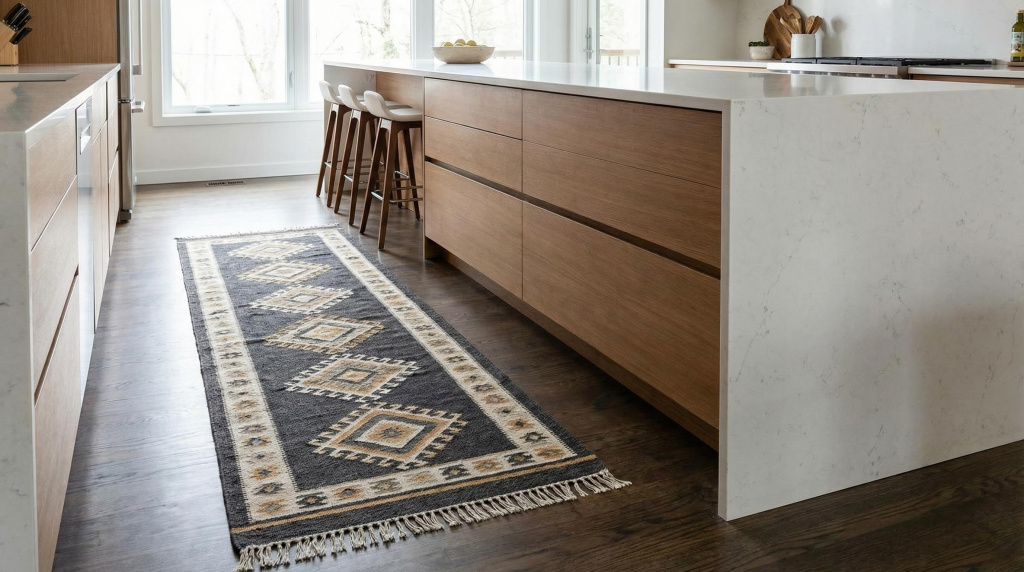
Placement of a runner rug depends on both workflow and visual impact. A common strategy is to align the runner with the main prep and cooking areas, such as in front of the sink, stove, or along a kitchen island. This not only protects the floor in high-use zones but also adds a sense of order and intentionality. For U-shaped kitchens, a runner can connect different sections, creating a cohesive line that guides the eye and supports movement. In open kitchens, runners can define a walkway or visually anchor an island, especially when paired with other complementary decor elements.
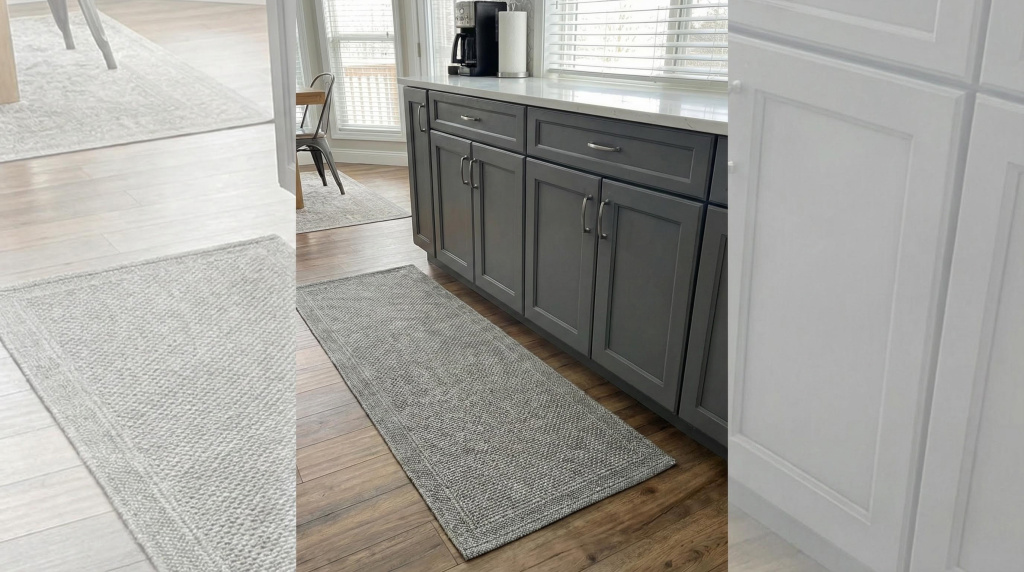
Color and pattern can further influence the runner’s effect. Light or neutral tones can make a kitchen feel larger and more open, while bold colors or patterns can add personality and energy. For instance, a green runner can bring freshness and vibrancy to a space, linking natural accents or plants, as seen in many green kitchen rugs. Grey runners offer a more subtle, sophisticated look that pairs well with stainless steel appliances and modern cabinetry, like those found in grey kitchen rugs. Selecting a runner that harmonizes with your kitchen’s palette ensures a seamless visual integration.
Styling Runners for Maximum Impact
Beyond practicality, runners contribute to a kitchen’s style narrative. Patterned or textured runners can break up monotony in neutral spaces, while minimalist designs complement sleek, modern kitchens. If your kitchen has a contemporary aesthetic, consider modern kitchen rugs that feature geometric motifs or subtle textures, which blend seamlessly with clean lines. In larger kitchens, a long, continuous runner can unify the space and create a sense of rhythm, while smaller, segmented runners can highlight key areas like the sink and prep zone, echoing the approach seen in large kitchen rugs.
Layering or pairing runners with mats can also enhance both function and style. For example, placing a smaller, cushioned mat under the sink for additional comfort, in combination with a longer runner along the main pathway, provides ergonomic support while keeping the kitchen visually appealing. Additionally, rotating or flipping runners periodically can help maintain even wear and extend their lifespan. Attention to these details ensures that the runner remains both a practical and decorative asset.
Ultimately, placing a runner rug in the kitchen is about balancing comfort, safety, and aesthetics. Thoughtful alignment with high-traffic areas, careful selection of length and width, and attention to color, pattern, and material all contribute to a space that is functional, inviting, and stylish. With the right runner, your kitchen becomes more than a utilitarian space—it becomes a cohesive and visually engaging area where movement, comfort, and design coexist seamlessly.